What it shows
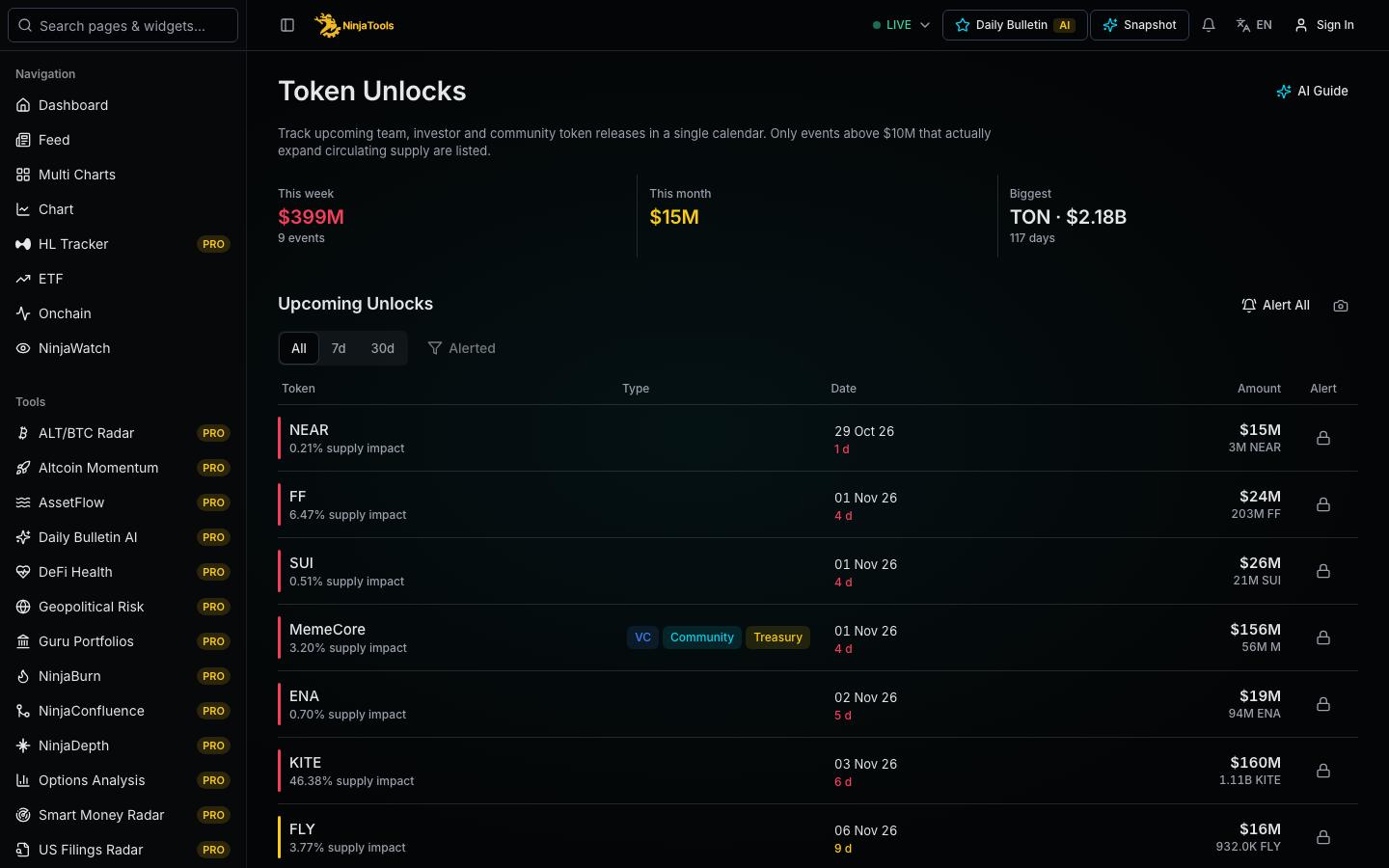
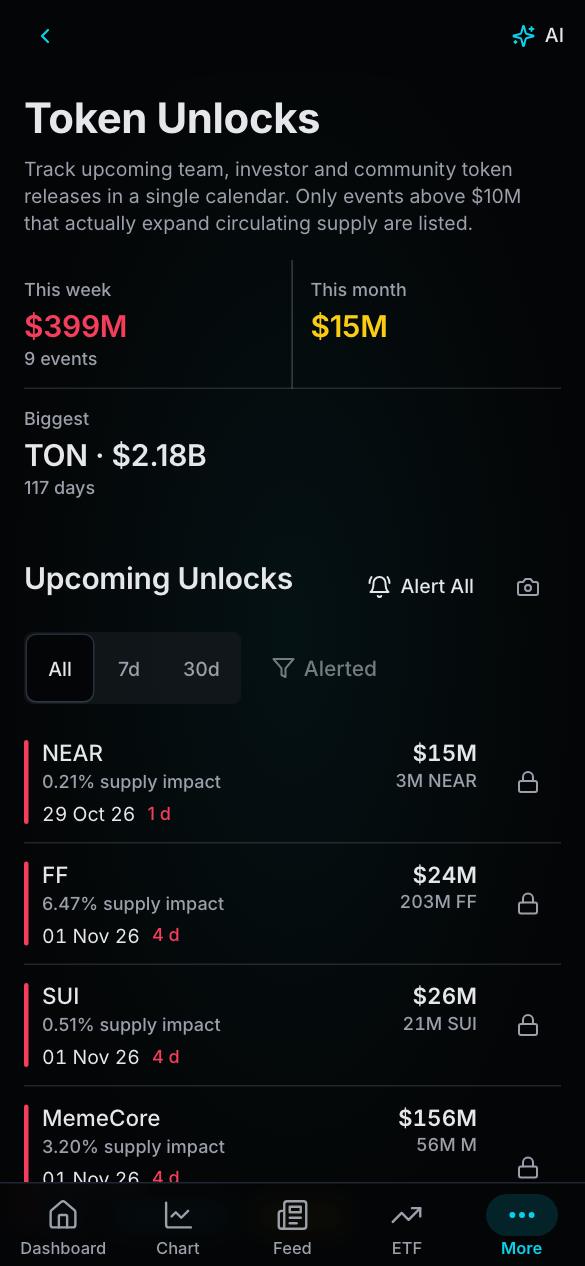
A token unlock is a date when locked tokens become free to move. Projects lock tokens for investors, team members, a foundation or the community, and release them by a schedule. This page lists upcoming unlocks. Each row shows the token, the date, the amount in tokens and in US dollars, and the size as a percent of the circulating supply. A badge shows the group that receives the tokens, such as investors, team, community, treasury or foundation. A monthly chart adds up the dollar value of unlocks. Summary tiles show the week ahead, the month ahead and the largest event.
- Upcoming unlock list
- Percent of supply impact
- Recipient group badges
- Monthly unlock chart
How to read it
Pick a window: all, seven days or 30 days. Read the dollar value and the percent of circulating supply together. The percent is the better size measure, because a large dollar value can be a small share of a large market. Check the group badge, because each recipient group has different terms. Then note the type. A cliff unlock releases a block of tokens at once. A linear unlock releases tokens in small steps over time. The monthly chart shows which months carry the most dollar value.
- Select a window and read the dollar value of the next events.
- Compare each event as a percent of circulating supply.
- Check the recipient group badge and the monthly chart.
What to keep in mind
Unlock amounts come from published token schedules, which projects can change. A dollar value uses a spot price at the time of calculation, so it moves with price. An unlock does not mean that tokens will be sold. Recipients can hold, stake or move them. The effect on price depends on many things, and this page does not forecast it. Some tokens are not covered, and the page lists larger events only.
A missing value is not zero. Check the source and time under each data block before you compare numbers.
In the app
Questions
What is a token unlock?
A token unlock is the moment when tokens that were locked by a schedule become tradable or movable. The schedule is part of the token design and is often set at launch. After an unlock, recipients can hold, stake, move or sell the tokens, and the page shows the date and size of each event.
What is the difference between cliff and linear unlocks?
A cliff unlock releases a large block of tokens on one date, after a lock period. A linear unlock releases tokens in equal parts over a period, such as every day or every month. The first creates one event. The second creates a steady flow of supply. Token documents state which type applies.
Does a token unlock make the price fall?
Not by itself. An unlock increases the supply that can be traded, but holders can keep tokens, stake them or move them without selling. Price depends on demand, market liquidity and expectations that already include the known schedule. Use the percent of circulating supply to judge size, and treat the date as context.