What it shows
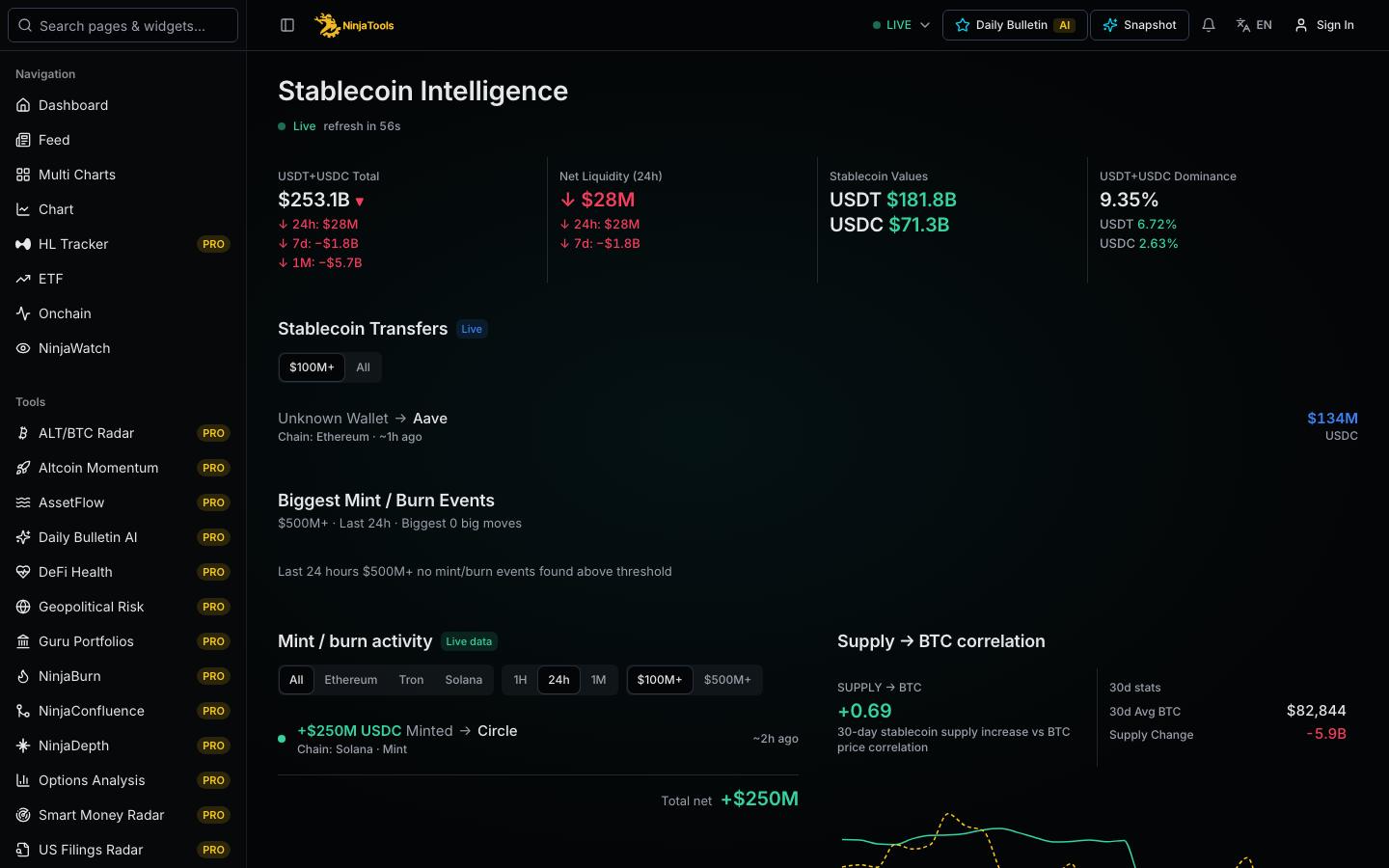
A stablecoin is a token designed to track the value of a currency, usually the US dollar. Its supply grows when the issuer mints new tokens and shrinks when the issuer burns tokens. This page tracks the supply of the large dollar stablecoins, with changes over short and longer windows. It also shows supply by blockchain, a feed of mint and burn events, and large transfers. A supply-versus-Bitcoin chart puts the two series on one timeline. Supply is a measure of dollar-denominated capital that sits on crypto networks and can be used to trade.
- Total supply and changes
- Supply by chain
- Mint and burn feed
- Supply versus BTC chart
How to read it
Start with the total supply and its change over the shown windows. A rising total means net minting. A falling total means net burning. Next, open the chain view to see where the supply sits, because a change on one chain can differ from the total. The mint and burn feed lists the single events with chain and size. The supply-versus-Bitcoin chart shows whether the two series moved together over the shown period. Correlation measures co-movement. It does not show cause.
- Read the total supply and its change over the shortest and longest windows.
- Check the chain view to see where supply grew or shrank.
- Scan the mint and burn feed for large single events.
What to keep in mind
Supply counts issued tokens. It does not count tokens held by traders or sitting on exchanges. A mint can be for an exchange, a treasury or a market maker, so it does not show demand to buy crypto. Burns can follow ordinary redemptions. Supply covers the stablecoins the page tracks, not every dollar token. Large transfers between wallets may be internal moves. Treat supply as background liquidity and not as a price forecast.
A missing value is not zero. Check the source and time under each data block before you compare numbers.
In the app
Questions
What does rising stablecoin supply mean?
It means issuers created more tokens than they redeemed over the selected window. This adds dollar-denominated balances to crypto networks. It does not say who holds them or whether holders will buy crypto. Read it as a change in available liquidity and compare it with price and exchange data.
What is the difference between minting and burning stablecoins?
Minting creates new tokens, usually when a customer deposits dollars with the issuer. Burning removes tokens when a customer redeems them for dollars. The page lists these events with their chain and size, and it sums them into a net figure for the chosen window. Net minting means supply grew. Net burning means supply shrank.
Does stablecoin supply predict Bitcoin price?
No. The page puts supply and Bitcoin price on one chart and reports their correlation over the shown period. Correlation can change over time and does not show cause. Supply growth can follow price rises as well as come before them. Use it as context for liquidity, not as a forecast.