What it shows
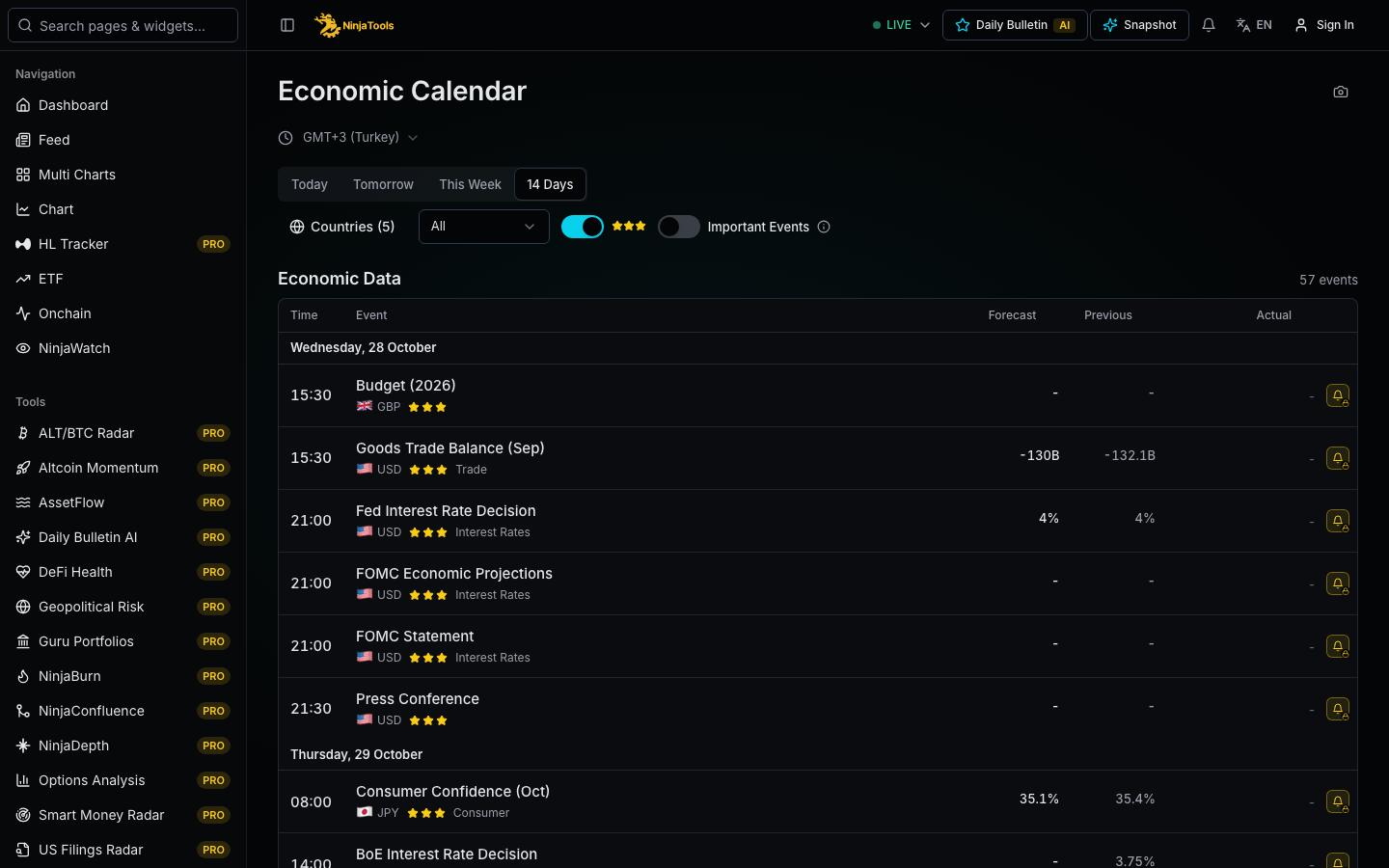
An economic calendar lists scheduled releases of macro data and central bank decisions. Each entry has a time, a country and the name of the release. It has three values: the forecast, the previous value and, after publication, the actual value. Well known examples are consumer price inflation (CPI), the US Federal Reserve rate decision (FOMC) and the US monthly jobs report (NFP). This page lets you filter by country (US, EU, UK, Japan, China), by category such as inflation or employment, and by time range. A filter for important events keeps the releases that often move markets.
How to read it
Set your time zone first. The page shows each release in the time zone you choose, and the day groups follow it. Then pick a range, from today to two weeks. Read the forecast and previous columns before a release to know what the market expects. After the release, the actual value appears next to the forecast. The difference between actual and forecast is often called the surprise. Use the category filter to focus on one theme. Use the country filter when you follow one currency.
- Select your time zone so release times match your clock.
- Filter by country and category to keep only the releases you follow.
- After a release, compare the actual value with the forecast and the previous value.
What to keep in mind
Forecasts are consensus estimates and not facts. Sources can differ by small amounts. Schedules can change, and agencies may revise a value after the first release. Units differ by release, for example percent, thousands or index points. The calendar does not show how markets reacted. The same release can lead to different reactions in different periods. Check the official agency source for critical data.
A missing value is not zero. Check the source and time under each data block before you compare numbers.
Questions
What do forecast, previous and actual mean?
Forecast is the consensus estimate for the release. Previous is the value from the last period, which agencies sometimes revise. Actual is the value published at release time. The calendar shows the actual value next to the forecast so you can see the gap.
What do CPI, FOMC and NFP mean?
CPI is the consumer price index, a measure of inflation. FOMC is the US Federal Open Market Committee, which sets the policy interest rate. NFP is the nonfarm payrolls report, a monthly count of jobs added in the US outside farms. The calendar lists these and other releases with their scheduled times.
Why do release times differ between sites?
Agencies publish in their local time. A calendar converts the time into the time zone you select. If a site uses another time zone or does not adjust for daylight saving changes, times can differ by an hour or more. Select the time zone on this page to match your own.